Showing posts with label Nature and Geology. Show all posts

Monday, November 4, 2013

Falling In Love

Before you get all weirded out about my blog title, let me make the disclaimer that this is NOT about my personal life.

Fallingwater

Great, now that that is out of the way, let's talk about Fallingwater, arguably the most famous home in the United States after the White House. This residence is probably the best known Frank Lloyd Wright building, and was built in the late 1930s for the Kaufmann family. For any non-locals, the Kaufmanns were the owners of probably the best department store EVER- Kaufmann's- that opened in 1871 but was bought out by Macy's in 2006. It was a big part of Pittsburgh culture. "Meet me under the Kaufmann's clock" is probably one of the most said phrases in the city (even though technically it's the Macy's clock now...), and has been a gathering place for residents since 1913. Obviously, to have had this much influence over the city, these folks had to have been wealthy. And one of the things they did with their money was to commission Mr. Wright to design a weekend home for them far from the city where they could be rejuvenated from all the smoke and pollution urban Pittsburgh suffered with due to steel making. They used this home for roughly 25-30 years, and then Edgar Kaufmann, Jr. donated the home to the Western Pennsylvania Conservancy to be turned into a museum for the public.


Which bring us to my Sunday afternoon visit to Fallingwater with two of my coworkers. It was about an hour drive from the city to the site. As the Queen of Public Transportation, let me tell you now there is NO way to get here unless you drive. NONE. We passed plenty of cows and fields on the way there. Not a bus stop sign in sight! And if you don't drive, good luck trying to find a bus tour out there- before my coworkers decided to go, I tried to Google tours from the city to the premises. I found ONE company that only does tours sporadically. Not very convenient, although it does include the nearby Kentuck Knob- another Wright home seven miles from Fallingwater that often gets overlooked by tourists (like us).

Inside the Visitor's Center

Anyway, once you get to the Visitor Center, you are told to listen for your tour number but to feel free to use the restrooms and browse the shop and cafe in the meantime. Once you are called, you are directed to a path after being told "the rules" of visiting the home, and you walk down a nature trail of sorts, making a right at a waterfall where your tour guide will be standing waiting for you with a giant walking stick in hand. Our tour guide was amazing- Eric Kobal. He was excited (but not crazy), knowledgeable (but not snooty), and friendly (but not fake). Seriously he knew details about EVERYTHING in the house- the plants in the gardens, the art on the walls, the books on the shelves, the design highlights, everything! I'm sure they probably go through some intense training in order to know so much, but I enjoyed that he didn't sound rehearsed and encouraged us to ask questions. Thankfully our group was engaging and excited to be on the tour.

Eric our tour guide! The guides carry the sticks as a sort of homage to Kaufmann, Sr.
who has a portrait in the living room holding one of these.

He had lots of quirky stories and factoids to share with us, but probably my favorite was the one about the color scheme of the home. The home is painted in a beige-y peach color called ocher and accented with Wright's favorite color, Cherokee red. This is actually the second choice of Wright- who thought the home should be covered in gold leaf! Imagine how that would have looked in depression era America-- one family being so rich they could afford to build a house covered in gold while just a few miles away their employees practically starved. Thankfully the Kaufmann's saw this was a terrible idea and the current color scheme was used instead.

After the main house tour (you go through both the main house and the guest house), you are taken to what used to be the car port but is now a sort of movie room where a different person (our was a woman named Bonnie) explains the ways the organization keeps the building maintained, discusses a little about how much it costs, and then does a strong push for membership and donations without coming across as a used car salesman. Seriously, if I had an extra hundred bucks in my pocket that day they could have had it- that's how positive the entire experience (even being solicited!) was. From there you are allowed to go back to the outside area and take pictures, but NOT the inside (more on that later) and then you head back to the Visitor Center. On the way back there is a side trail that takes you to a great spot to take the "iconic" Fallingwater pic that everyone always sees in magazines and books. I honestly had an awesome time here (history and arts nerd that I am!) and would love to come back.

The oldest piece of art in the home. A Hindu goddess statue dating to around 700 AD
Taken from outside so as not to break the rules!

Now, some tips and random tidbits. Don't even think about wearing non-flat, feet exposing shoes. Most of the surfaces we walked were either uneven stone, gravel, or dirt and wood chips so wear something sturdy and protective on your feet. If you've never been and aren't sure you'll like it, take the regular tour. It's $22 for adults. But if you already know you are a Wright fan or want a VIP experience, go ahead and shell out the $65 for the in-depth tour (I know I will next time!). What's the difference? Well, you get a tour that's twice as long in a smaller group (a maximum of ten) AND you'll get to take pictures inside of the house (which we were not allowed to do) and go to areas the general public isn't allowed. AND you won't have to worry about other tours bunching up in spaces with you as the VIP tours are pretty much isolated from everyone else.

A gathering of walking sticks and a donation box. 

Whichever tour you take, I beg you to please ask questions about the art and sculpture you see around you. Why? Well, where else can you be super close and personal with original, authentic Picassos? There are Japanese woodcuts, Riveras, and Khalos mixed in with ancient art from around the world. And there are beautiful antique books that belonged to Junior of some of the most celebrated titles in the history of literature. Another highlight was learning that the Kaufmann's cook, Elsie Henderson, is alive and well at 100 years of age and was recently at the home signing copies of her cookbook (they didn't have any signed copies for me to purchase, otherwise I would have!)

Thank you so much for reading my blog and for following me on my adventure! Feel free to check out my Facebook page (and hit that like button!), and follow me on Twitter to find out where I'm headed next!


Monday, October 7, 2013

My First Fjord

Fjord. Such a funny word to say! But what a beautiful sight to see!

The entire first day of my Carnival cruise to Alaska was spent slowly sailing up this majestic water canyon that is the Tracy Arm Fjord. A woman was announcing over the sound system when whales or other interesting wildlife would come past and say hello to our ship passing by. (It wasn't very helpful. For some reason the whales didn't realize it takes a few seconds to whip out a phone or camera to snap a pic or video to show all of our friends and blog readers that "Look, I saw a humpback whale!!" and would dip back into the water very quickly).

This was my first look at Alaska as well. It was relatively warm (mid 60s on August 28, 2013 when we were there) considering I was expecting it to be frigid and snowy the entire time. I mean, isn't that what those of us in the continental 48 are told to expect from Alaska?

Let me be the first to tell you that was hardly the case. The only time the air was really biting was when the wind blew, but with a corduroy jacket I was fine.The water was just as turquoise and sparkling (though not see-through) as any Caribbean waters I've seen- and I've been to seven of the islands down there. The trees on the cliffs were a rich but earthy green. Speaking of the cliffs, they were very steep and only at the very tops were covered in snow. We saw chunks of blue-looking glacier ice float past us (hopefully not breaking off due to global warming!) and occasionally saw eagles or goats living their lives oblivious to the 2000+ people gawking at them from a big white ship.

We ended at Dawe's Glacier at the end of the Fjord. You could pay ($400-500) for excursions to take a smaller boat up to the glacier and see the wildlife up close and personal. I didn't have $500 to spare so I watched from the main ship with the majority of the other passengers and shot a pretty nifty two minute video that I uploaded to YouTube. I few couples my god mother and I befriended did take the excursion and they showed us pictures of seals chilling on rocks and glacier chunks. Pretty neat.

Nothing left now but to leave you with the pictures I was able to snap while in the Fjord and other waters of Alaska as well as my YouTube vid I mentioned earlier.


As always thank you for joining me on my journey across America.

Thursday, September 19, 2013

I'm a Gold Digger

The land that would eventually become America's 49th state (Alaska) was purchased from Russia in March of 1867. Not even 30 years later gold was discovered, and the Klondike Gold Rush began. 100,000 people from all over the world (but largely America) made the journey towards Alaska. Of those, only about 30,000 actually made it there, and out of that number only 4,000 found any gold. It was a very rough and tedious task to undertake, all on the hopes that one would find a big hunk of yellow metal and become rich.

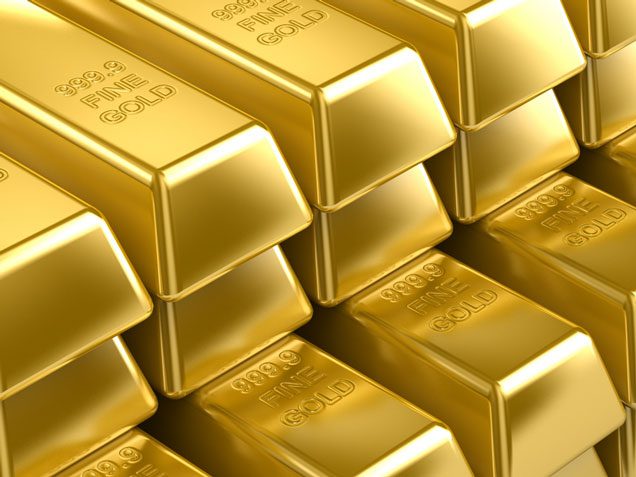
If only it came out of the ground this way...
Image from www.munknee.com
Let me tell you, that they were much better than I am to have that much hope. I panned for gold for 15 minutes and only found a few dozen flakes. It was tedious and not fun after the novelty of being a city girl gold prospecting wore off. Let me explain...

I did a cruise excursion to the AJ Mine/Gastineau Mill during our (too short) port stop in Juneau, Alaska- the state capital. Early in the morning, myself and about 10 other cruisers hopped onto our mini bus, and took the 10 minute ride up the steep (and scary looking!) wooded mountain side to reach the first part of our experience: the mine entrance.


We had to wear safety helmets to go inside (I mean, we are going inside of a mountain after all) and were escorted by John Hughes. He was really nice and seemed truly interested in not only the entire culture of mining, but in telling us about it and learning about what we did in our non-vacation lives. He told us that he was half Welsh and half Tlingit, and that he also carved masks that were sold in the gift shop we would see later (great self plug, I gotta admit- tell us about the stuff you make before you take us into a mine that could potentially be dangerous).

John and I outside of the mine
What I expected was a ride in an old mine cart on a rickety railway a la every adventure movie involving mines and treasure ever. Instead, there were easily walkable wooden walkways covered in highly textured... stuff... to prevent slipping and falling. John stopped us at various points in the mine to show us different steps on how ore was actually marked, drilled, blasted, and hauled away. I got a few videos of some of the demonstrations, and you can check them out on my YouTube Channel here. All in all we spent about 45 minutes in the mine, which is much colder than the outside, so if you get the chance to go, take a jacket. I had a chill with a heavy cable sweater and corduroy jacket and pants on.

At the mine entrance

John giving us a demonstration of one of the machines

After that, we were bussed back down the mountain (just as scary and steep and bumpy going down as going up!) to an outdoor heated pavilion where we learned this history of the mine and how it used to actually operate and were showed pictures of the mine during its heyday. This was particularly cool, and a little eerie, when you realized the nature-covered structure you are facing is actually the ruins of the pristine looking mine in the photograph.

THEN....
...AND NOW!
After that presentation, which lasted about 10 minutes, we were free to roam the grounds (taking care not to go beyond the rope barriers for safety reasons), and to go to the gold panning station, where everyone is guaranteed to find gold or garnets to take home with them!

Walking around the grounds, there were a ton of old rusty machines and vehicles that were used at some point in the mine's active days. To me, they were beautiful, and the conservationist in me was flabbergasted as to why they were allowed to rust and decay out in the elements without any sort of protection. Why, in a few years most of them will be too rusted out to be recognizable! But perhaps that's part of the "charm" *history nerd shudder* they were going for.

Beautiful and tragic all at once!
So, back to this gold panning. This was done under another awning (no heat this time) in dim light. Two guys showed us how to agitate our gold pans so that the silt and sediment and rocks would eventually filter out to leave us with pretty gold flakes or garnet grains to put inside of our little take home valves. I stood there for fifteen minutes, scooping two pans worth of gunk, and still needed help to get the last few bits of unwanted matter out. It was very slow, and in all that time I only found about $5.00 worth of gold. Now, if I had that much trouble in a touristy fashion, just imagine those poor souls 120 years ago having to do it all on their own without help!

See those light colored flakes to the right of the bottom circle of my pan?
That's my gold!
15 minutes of tedious work for about $5 worth of gold
I really enjoyed my time there. In talking with the two guys who helped us with our gold panning I learned that a lot of college kids from the Pacific Northwest and the Southwest come up to Alaska to work for a year or two, save up their money, and then use it to pay for college. I also learned Alaskan colleges tend to be extra generous with scholarship money. John also told us that with just a high school degree you can start off earning $80K to work in the mines, and that again, a lot of young folks come up and work for a year or two before heading off to college or other locations. While I don't think I personally have what it takes to do such intense manual labor, I applaud them for finding ways to make college more affordable!

The gift shop on site was pretty standard, but the prices were slightly less expensive than the "main" Alaskan tourist shops located in downtown Juneau. The biggest highlight was the lack of a huge confused crowd like in the shops at the port. When we were in Juneau, there were two other ships docked. Now my ship (the Carnival Miracle) holds more than 2000 guests- and we weren't the biggest ship there. So imagine 6000+ people clamoring for t-shirts and ulu knives in a handful of stores---- stressful to say the least! Anyway, at the gold mine shop, I picked up a cute pair of earrings made by a local artist using Alaskan clay and white gold. I love them, even if they are a bit different for me, and was happy to support the local arts scene!

Kinda quirky, but they were calling to me!
Well folks, I still have a TON of things to blog about from Alaska and Washington. I truly appreciate everyone who follows me along my journey via the blog, Facebook, and Twitter, and as always, I'll see you on the next adventure!

Wednesday, May 9, 2012

Florida - Part I (Miami)

After three months of waiting for my next adventure into my homeland, I am finally able to present a new installment into my personal journey: a brief visit into Miami, Florida!

Settled by Americans in 1825, and formally incorporated in July 1896, the city has roots that go back thousands of years when the area was inhabited by the Tequesta Native Americans,  the 1560s when it was claimed by the Spanish, and 1763 when the Spaniards surrendered the area to the British. Miami is the largest metropolitan area in the southeastern United States, and the fifth largest metro region in the entire country. It is also the number one passenger cruise-line port, and just like in my visit to Puerto Rico, it was a cruise to another country (this time the Bahamas with my two sisters and oldest niece) that brought me to the city. I spent one day before and one day after the cruise in the city, and here's what I saw:

A fountain at the Lincoln Road Mall

LINCOLN ROAD MALL

     I only spent about two hours or so in this area of Miami with my sisters and my niece, but I will say it seemed to be a very happening place! There were lots of chain stores (like Victoria's Secret, MAC, etc) and a few specialty boutiques, so if you just want to be able to say you bought something in Miami but not be pressed about if it is reflective of the culture or region or if it is overly catered to tourists, this is where you would go. Lots of folks walking dogs, sitting at the ample outdoor seating in many of the restaurants, and a few people with creative hustles that were very entertaining (for example, I gave a dollar to a man who was painted and dressed in all white holding an all white guitar and not moving, who would dance and move to Elvis songs when you dropped a dollar in his guitar case). I had sangria and chicken fajitas with my family at The Cafe at Books & Books. Laughed, sang, danced around, and enjoyed my evening there.

Alligators in part of the Everglades

EVERGLADES NATIONAL PARK

     What else can one say about the Everglades but "Wow!" One of America's most famous natural wonders, it is the third largest National Park. I took an airboat ride and tour at the Everglades Safari Park as a post-cruise excursion, and I learned a lot about the Everglades, including that the Everglades are not a swamp like many people think, but actually a massive slow moving river system. Water from Lake Okeechobee flows into the Everglades at a rate of about a mile each day, and the water is optimally around two feet deep most of the time.

     As we lined up to board our airboats (which we were told do minimal damage to the park because they literally float on top of everything- the water, sawgrass, and even harmlessly over animals!), Hector, one of the two dominant male alligators, and about ten different birds of varying species greeted us at the walkway towards the vessels. We were given earplugs to drown out the sound of the loud engines (and you need them!) and were on our way! At first, we went pretty slow as the airboat operator told us random facts about the park (sawgrass is edible and looks like a small onion at it's roots! String lilies are one of many flowers and plants native to the Everglades!) but we sped up to about 50 mph as the tour went on. It was surprisingly fresh smelling and cool out on the water, and there was no shortage of birds, gators, turtles, and other animals to see and take photos of.


     After the thirty minute airboat tour, we got to see an alligator show hosted by a man named Jeff who told us how to differentiate between alligators, crocodiles, and the rare caimans. He also showed us how quickly and powerfully their jaws can snap shut, and after a few more demonstrations and factoids, allowed us to take pictures holding a "baby" alligator named Snappy (of all things!) Probably the coolest thing I've done so far this year!

Me holding Snappy...and Jeff nearby in case he lives up to his name!

     Also on site at this particular part of the Everglades was a short walking tour with pens holding different types of gators, crocs, and caimans, and a small circular one room "museum" with Native American crafts and histories, and tanks with snakes, turtles, and baby alligators. It was dark, cobweb riddled, and looked like it hadn't been visited in months if not years. But if you could look past it's shabby presentation, the information included was quite interesting!

The Versailles Restaurant in Little Havana, Miami


VERSAILLES RESTUARANT

     After the Everglades excursion, I was dropped off at the Miami International Airport, where after charging my phone a few minutes (thank God I keep my charger in my purse!), I caught the 37 South Miami Station bus and after about a 10 or 15 minute ride, found myself a block away from what Lonely Planet, Yelp, and my friends who are from the Miami area all say is the best Cuban cuisine in South Florida- the Versailles Restaurant. Although I felt a little hesitation to give me a table and menu, I'll chalk it up to not being everyday a black girl with a giant afro, beaming smile, and a suitcase come sashaying into the place asking how everyone was in Yankee-accented English, but after I sat down, I was totally fine. I ordered vaca frita de pollo - grilled shredded chicken with onions, served with white rice and sweet plantain. The food came out in less than ten minutes (seriously, closer to five) and was THE best food I'd had all weekend! Flavorful, and more than your money's worth, it was all excellent!

Vaca frita de pollo from Versailles
     It should also be noted that they had an extensive dessert menu, and a bakery connected to the restuarant next door, however, because the person I was traveling with had a bit of an attitude, I felt rushed out of the restaurant and didn't get to try any of those buttery, flaky looking pastries. *insert sad face here*


VIZCAYA MUSEUM & GARDENS

     My last stop in Miami was the Vizcaya Museum and Gardens. In case you haven't gotten the gist of things by now, I have a nerdy fetish for antiques and old architecture. Something about the history of a place or object makes me fall in love with it, it's like walking into another world or time- and that's how beautiful Vizcaya is. Sure, it cost $15 to come in (and sadly, no photos are allowed inside the mansion, but are allowed outside), but I didn't know places like this really existed in America. It was like an old Spanish or Italian villa had found itself lost on the tip of Florida. Since I'm a little tired to paraphrase the history of this gorgeous location, I'll let you read it straight from their website:

Vizcaya was the winter residence of American industrialist James Deering from Christmas 1916 until his death in 1925.  Deering was a Vice President of the International Harvester Company, which produced agricultural equipment for a worldwide market...The house was intended to appear as an Italian estate that had stood for 400 years and had been occupied and renovated by several generations of a family.  It has 34 decorated rooms with 15th through 19th century antique furnishings and art objects. The house appears to be only two stories high but between the main public rooms and the bedrooms, there is an intervening level with 12 rooms for servants and service...Over the years the effects of South Florida’s humid climate and salt air have taken their toll on Vizcaya, necessitating continuous restoration.  Although the house’s design allowed the free flow of breezes through the open courtyard, the need to preserve the building and contents required the installation of a climate and humidity control system, including enclosing the open courtyard in glass. Today we can only imagine how Vizcaya felt as an open-air house, with the sounds of birds and the bay, the sudden rain showers, and the fragrance of flowers.


     The house rooms are each designed to pay homage to various European nobility or events, and there is an Asian inspired tea room that overlooks the Biscayne Bay. It had a round dining room table with large statues of a man and woman inside, guarded by four blue stone dragons at the outside door. A giant organ, hidden in the walls somehow, played music that could be heard throughout the house. And whereas before in my visit to Mount Vernon I thought Washington had the best back yard ever- Vizcaya took that idea and shattered it into a million pieces! I literally gasped out loud when I saw all that water, architechture, and grandeur in one place. They were setting up for some lucky girl's wedding, and the staff informed me that early spring and late fall are heavy wedding times for the Museum- and frankly I can see why! Anyone who's ever dreamed of having a princess fairy tale wedding- or even thought they looked pretty- would die a million deaths at the sight of this place!

Well, the photos are up on Facebook, so don't feel shy about hitting that "Like" button, and if you haven't started following me on Pinterest, please feel free to do so. I'll be doing a vlog about Miami public transportation within the week, and as always, will be on Twitter tweets US history facts, and other travel information. Feel free to comment, email, etc., and I'll see you on the next go round!